Gay Military Signal
Blame Brigade
|

|
So now Afghanistan has reverted back to the stone age, Kabul is lost, and the nation again becomes a backwater of venomous internecine killing fields. The trillion dollar trained national army turned and ran for the hills, leaving behind priceless military equipment, the moment the ragged savages appeared. At which point the highly trained and equipped national armed forces seemingly pissed in their pants and ran screaming in terror. According to an Afghan General, the problem was due to government corruption, a failure to deliver food, ammunition, pay, air cover and coordination. The troops lost faith in their leadership, felt abandoned, and abandoned their posts. Bloody Fucking Hell! And unbelievably we sent in the helicopters, again, to evacuate the Embassy while terrified personnel frantically shredded piles and piles of paper and wacked hard drives with hammers. Primitive, very sadly primitive! I can just hear Betty Davis cynically saying, "WHAT a fuckup!"
OH the finger pointing is in high gear with shrill Republicans screeching their heads off trying to blame Democrats for pissing in their morning coffee. (Now there's an idea). But seriously, if your country was about to be taken over by the boogeymen, wouldn't you stand and fight fiercely like an Israeli? Or would you abandon your brand new Humvee, rip off your uniform, and run half naked to the Iranian border? WHAT kind of pusillanimous poltroons were our hero warriors risking their lives training?
And the historically repetitive scene unfolded yet again, just as it had in Shanghai in December of 1941, as millions ran through the streets in terror, flooding the port desperately looking for a way out. And Saigon in 75, and Rwanda, and Phnom Penh, Warsaw, an endless list. And now Kabul airport where hordes of totally crazed people clung to the outside of an Air Force cargo plane as it took off, falling to their deaths from the sky, or getting crushed in the wheel wells. And rushing a commercial jet, ticketless, climbing over each other until it was so overloaded it couldn't take off and they refused to debark. Seriously! What the Hell? The insurgent forces were so freaked out by the panic that they actually tried to be nice!
Of course, this does not happen everywhere. I saw the Philippine Revolution that ousted Marcos on TV. There was no panic, no guns, no thunder of helicopters and no explosive thuds of mortars. Instead, a million peaceful people surrounded a huge military base, set up a gigantic sound system and blasted Neal Sedaca songs into the base. Entire brigades of sentimental soldiers burst into tears, threw down their weapons and emerged from the base to embrace and hug the protestors. Seeing that, the Marcos family fled to the airport with suitcases stuffed with money; and that was that. Sure, it was nuts and made no sense; but it was a helova lot better that a highly trained army tearing off their uniforms and running half naked in terror to the Iranian border. The new petit Philippine President, Corazon Aquino, spent her first night on the balcony of the Presidential Palace throwing thousands of elegant shoes into the darkness, shouting in disgust, "size 9, size 9, size 9...."
Meanwhile, the treasonous Republicans, foaming at the mouth with glee, could not have celebrated the Afghan debacle with greater joy than if they had planned the whole thing in cahoots with the enemy. Moscow Mitch nearly broke his fat neck rushing in front of the TV cameras to harrumph in apoplectic ecstasy.
MORE
Archive
Does sex chat with girls build connections?
In the current age of online interactions, sex chat has become a frequent method for people to form intimate ties. This type of engagement, often through text or video platforms, has gained traction as individuals look for ways to connect in virtual spaces. A key question arises: can adult chat with girls lead to genuine bonds, or does it stay at a shallow level? With elements of emotional openness and complex mental dynamics involved, these sexual exchanges carry the promise of closeness, though they also present obstacles that might hinder deeper relationships.
Adult chat with girls often begins as a lighthearted or flirty interaction, but it can transform into something more significant. Past the initial excitement, these discussions sometimes allow for sharing personal wishes, anxieties, and aspirations. Opening up about such private matters can generate a surprising emotional bond, even within a digital setting.
MORE
Key advices for straight male and gay cam modelss
A website like Stripchat has the advantage of being accessible to everyone. If you want to broadcast and earn money, you don't have to be a certain kind of lady. It may be used to anyone's benefit, even gay and straight male cam models.
On the website, there are a lot of male broadcasters, and you may be one of them. All you need to create your own space is a camera and an internet connection.
Just be aware of what's coming your way. Here are some of the most typical gay cams experiences for male broadcasters.
MORE
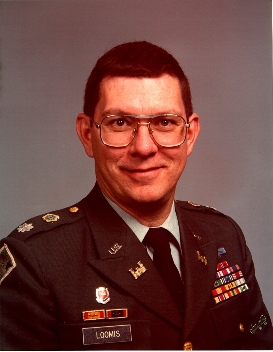
Prominent gay men in the US military
Throughout history, being gay has been considered a taboo subject in many societies, including the military. The notion that homosexuals could not serve in the armed forces was a common belief for many years. However, this mindset has evolved, and as society has progressed, so has the military. Today, there are many openly gay men who have served in the military and made significant contributions to their country. In this article, we will explore some of the most prominent gay men in the military.
MORE